

Seniors in the Global Scholars program at Berkeley create an action project to raise awareness and educate individuals about their topic. For this particular project, this article explains Afghanistan’s current state, Bacha Bazi trafficking, and how it continues in Afghanistan.
The Taliban, a Sunni fundamentalist group, after taking control of Afghanistan in the late 1990s, returned to power in 2021. Many individuals were forced to flee their homes and were displaced. Droughts were also a major issue at this time, by hurting the agriculture industry and worsening food insecurity. COVID-19 added to this issue by increasing poverty and disrupting the economy.
Foreign aid from the United States was cut off, and tens of thousands of skilled Afghans fled the country, taking their funds with them. As a result of this freeze, businesses started to close and unemployment started growing. Fuel and food became unaffordable. Citizens were not able to receive food assistance or healthcare because aid organizations could not access available funds due to United States and European sanctions.
Afghans were desperate to flee Afghanistan and were forced to take part in “pay as you go” smuggling. This is an economical means of transportation out of a hostile country, where migrants pay different people at different stages to help them travel, rather than a single individual. The danger of this loose network opens the door to human trafficking as a way to purchase freedom.
As for actual living conditions, the Taliban has limited women’s rights and spread overall violence. Girls are prohibited from attending secondary school or university. They are also barred from teaching. In public, women are mandated to dress modestly and cover their bodies. They are also obligated to be accompanied by a man at all times. Public spaces such as gyms and parks are out of the question. This has caused women to be incarcerated in their own homes.
“When you put a price tag on basic liberties such as freedom, safety, and security, abuse is sure to follow,” said Catherine Zhang ’26.
This creates tremendous barriers for women who are part of the LGBTQIA+ community to do much of anything, particularly travel. This is because it is illegal for women to travel without a mahram, which is a male chaperone. If women dare to disobey the Taliban’s rules, they are arrested and could possibly be killed. This is evidence of how quickly gender equality can be eliminated. Afghanistan is said to be the most repressive country in the world for both women and girls.

The LGBTQIA+ community in Afghanistan is currently suffering as well. There have been threats of capital punishment and reports of sexual assault. Friends and family members of individuals in this community have also been targeted. This has made the LGBTQIA+ community and its supporters very vulnerable. The terrorist organization claims that homosexuality goes against Sharia, a set of Islamic laws. The Taliban states that only within the framework of Islamic laws will human rights be respected.
“It’s terrible to think about how something as simple as who you love can be seen as justification for persecution in some places,” said Brianna King ’26.
All of these factors have created instability in Afghanistan and have helped to contribute to a human trafficking crisis. Recruitment, transportation, housing and exploiting people for profit are all components of human trafficking. There are multiple types of trafficking, with sex trafficking being the most common. This is when people are forced into sexual intercourse.
Unlike other countries, in Afghanistan, young boys face the great risk of sexual exploitation. The most common type of human trafficking for boys is called Bacha Bazi. Bacha Bazi is the practice of forcing young boys to pretend to be girls by dressing them up and forcing them to wear makeup. Bells are strapped to these boys’ feet and scarves are put over their heads to hide their masculinity. These boys are then forced to dance for their trafficker and enter illegal relationships with them.
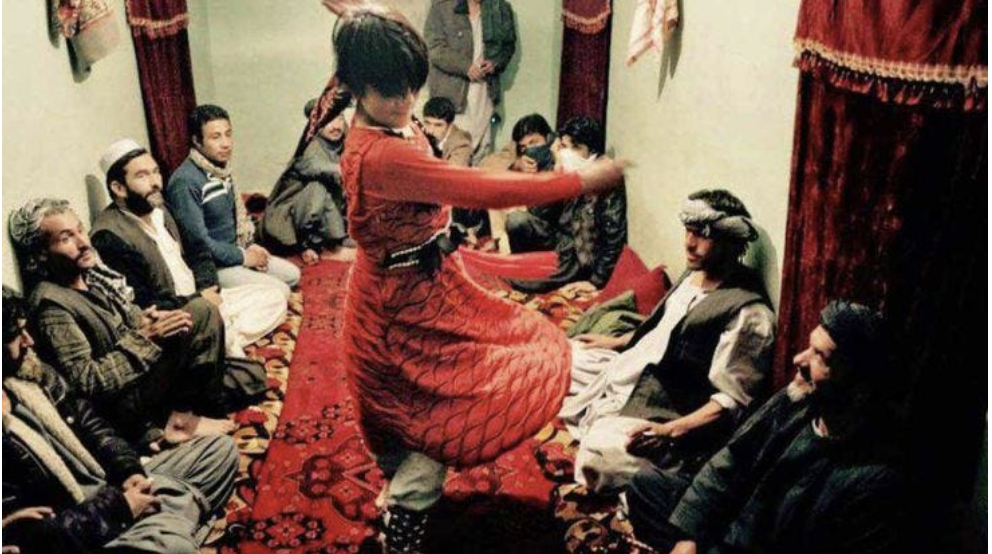
The boys are normally from low-income families. Living in a region of poverty and domestic violence increases their susceptibility to being abused. Many of these boys are sold in exchange for money, education and safety, but then are sexually exploited by older men. Most of these families do not know the reality of what happens to their boys. Many of these boys are molested as young as nine years old. In 2020 alone, 185 cases of Bacha Bazi were reported.
The culprits of Bacha Bazi are mainly Mujahedin commanders and warlords who want to show off, as trafficking is a symbol of wealth and the ability to control others in the community. The practice of Bacha Bazi has been brought to Germany, Hungary, Serbia and North Macedonia.
The victims of Bacha Bazi are often left with health concerns such as STDs, broken bones, fractures and, in extreme cases, death. Many of these boys will suffer from psychological issues due to their exploitation, and it is common that these boys will often have a desire for revenge. This makes it very difficult for them to readjust to society. Sadly, many of these boys will become Bacha Baz and traffic other boys when they are older, which will continue the cycle of exploitation.
Although illegal, the Taliban is known to recruit Bacha Bazi victims and underage children to terrorist organizations with false promises and harassment. There has been no age verification to check if the boys were 18 or older for military-like service. The Taliban denies enrolling children, but with no proof otherwise, this information seems unreliable.
Ironically, Bacha Bazi is justified by Sharia law. Women are forbidden to dance in public, and homosexuality is completely forbidden due to this extremism; hence, Bacha Bazi is allowed because the boys are said to be neither male nor female when they are dressed up. It is also said that the practice is ok because the perpetrators are not in love with the boys, which makes it permissible to use them sexually. This is another unfortunate consequence of poverty and fascism, with no opportunities for advancement in Afghanistan.
Women are also affected by Bacha Baz, but in different and dramatic ways. In Afghanistan, men are ordered to marry women and have kids. As these are loveless transactional relationships, many men lose interest in their wives and drift to young boys. Many fall victim to abuse in these scenarios.
Many families and victims are terrified to speak up against what is happening because of cultural norms. Retaining a good reputation is a principal value in Afghanistan. This brings up the question, “If the abused do not speak out and cannot, who will?”
When victims are unable to speak up due to fear and cultural expectations, the responsibility falls on those who can speak out. It is up to outsiders in safe positions to raise awareness and to advocate for change. If no one steps in, this abuse will continue to become unchecked. It is necessary to bring awareness to this issue to push for meaningful change and to protect victims. Addressing Bacha Bazi is a moral necessity, and the simplest way to help out is to continue spreading awareness.
Posting on social media is a great way to start. Announcements can help expose the reality of Bacha bazi and share survivors’ stories. They can also help distribute information on how to report trafficking and support survivors. Sharing this article can also help bring the underreported issue of Bacha Bazi to a larger audience.


